Did the
primary school children who took to the streets of Blantyre and Lilongwe during the civil servants strike in February do this on their own? Or did someone organize
them? Are Malawian school children capable or organizing themselves in this
manner?
When I first
learned of the development, my initial reaction was that the children had
become concerned with the lack of progress in the salary negotiations, and how
this was affecting their education. On social media, the news was received with
both admiration and alarm. Some exclaimed that this was the first time ever in
Malawi’s history that very young school children were expressing their right to
free speech, and showing grown-ups that they took their schooling very
seriously. Some saw rare heroism from the country’s youngest citizens,
suggesting that these school children were “re-defining active citizenship,” in
the words of Kondwani Farai Chikadza in a Facebook status update.
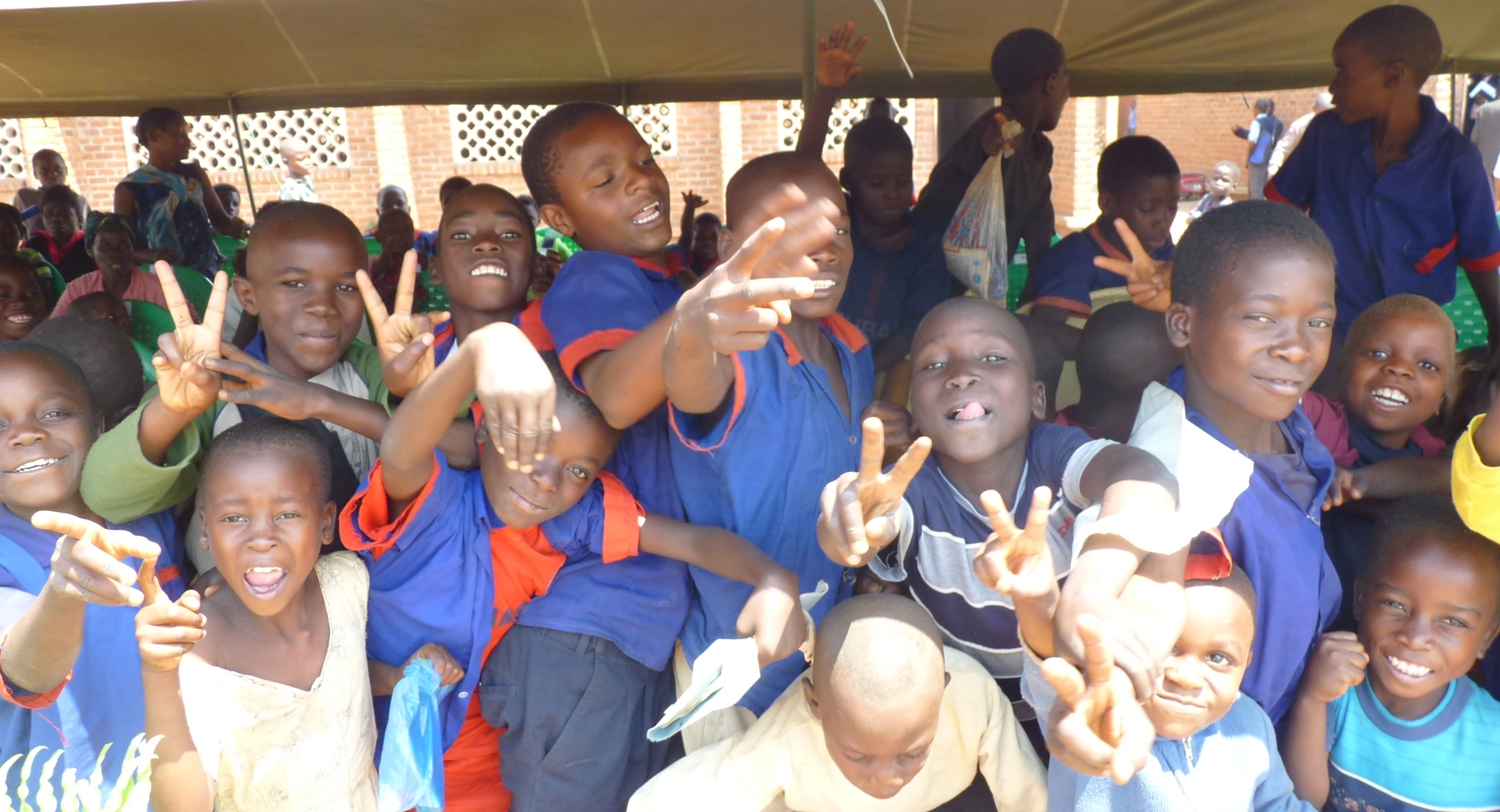 |
| School children pose and make the ubiquitious peace sign |
But others
were very alarmed. They worried that something tragic could easily happen to
the children, and there would be no one to be held accountable. Active
facebooker Peter Kalua wrote: “Who is guiding these kids? What if they get run
over, what if some of them go missing? If there is someone behind the protests
of these kids, let him think properly. This is child abuse.” He spoke from a parent’s perspective and added, “I would not want to see my kid in this chaos.”
The
children’s action raised several questions. How could they have left school by
themselves without adult supervision? How could children from several schools
have organised themselves in such an orderly way, knowing where to converge and
where to head towards? But there were many others who could simply not buy the
idea that Malawian primary school children could do this. There had to be
someone who had organised them, for purely political gains. This was also the
stand taken by the few children’s rights NGOs who spoke out on the issue.
One only
hopes we will be able to get to the bottom of this and find out the truth. If it
turns out that some grown-ups were indeed behind this, then it is extremely
unfortunate and reprehensible. It will be frightening to see the extent to
which some people can go, putting children in harm’s way just to score
political points. It was already disturbing to hear one broadcasting house
deliberately misrepresent and politicize the school children’s action as a protest
against the teachers’ strike.
Regardless of
whether these school children were organised by someone or not, there are lessons
to be learned by all of us. The first lesson is that we must put in place
measures for dealing with the safety and security of school children’s during
strikes. Many school children understood why their teachers joined the strike,
and stood with them in solidarity. But many schools left the children on their
own, communicating nothing about the strike, and putting no measures in place
for the children’s safety. This was a clear case of poor leadership at the
school level and the strike’s organizing structures. A teachable moment was lost
here.
The second
lesson is that we need to become aware of the changing definitions of active citizenship
and our understanding of childhood. A lot of Malawians point to the passivity
and docility of us as citizens as the root causes of the socio-economic and
political problems the country is facing. We have a history of expecting
someone up there, be it “government” or even “God”, to solve our problems. But
times have changed.
This ties
into the third lesson. We need to view the discourse on leadership in our
country in terms of what Malawi might look like when our school children become
more actively engaged in social and political matters. Whether we like it or
not, that day is fast approaching. The school curriculum teaches about civic
engagement, although most schools handle this more as theory than practice. The
best educational systems in the world involve school children in civic
engagement and provide a safe environment for them to do so.
We cannot
talk of active citizenship in the school curriculum while expecting that our
children will remain aloof from and uninterested in the ills that afflict
Malawian society. Children learn more than what the curriculum teaches. They
learn by observing the grown-ups who surround them. We must always remember
that the children are watching us, and are making their own judgments about how
leaders lead. Knowing this should make us conscious about what we would like
our children to learn, and what kind of Malawi we would like to bequeath to
them.
This article first appeared in the My Turn op-ed column of The Nation newspaper on Wednesday 27th February, 2013.
This article first appeared in the My Turn op-ed column of The Nation newspaper on Wednesday 27th February, 2013.


